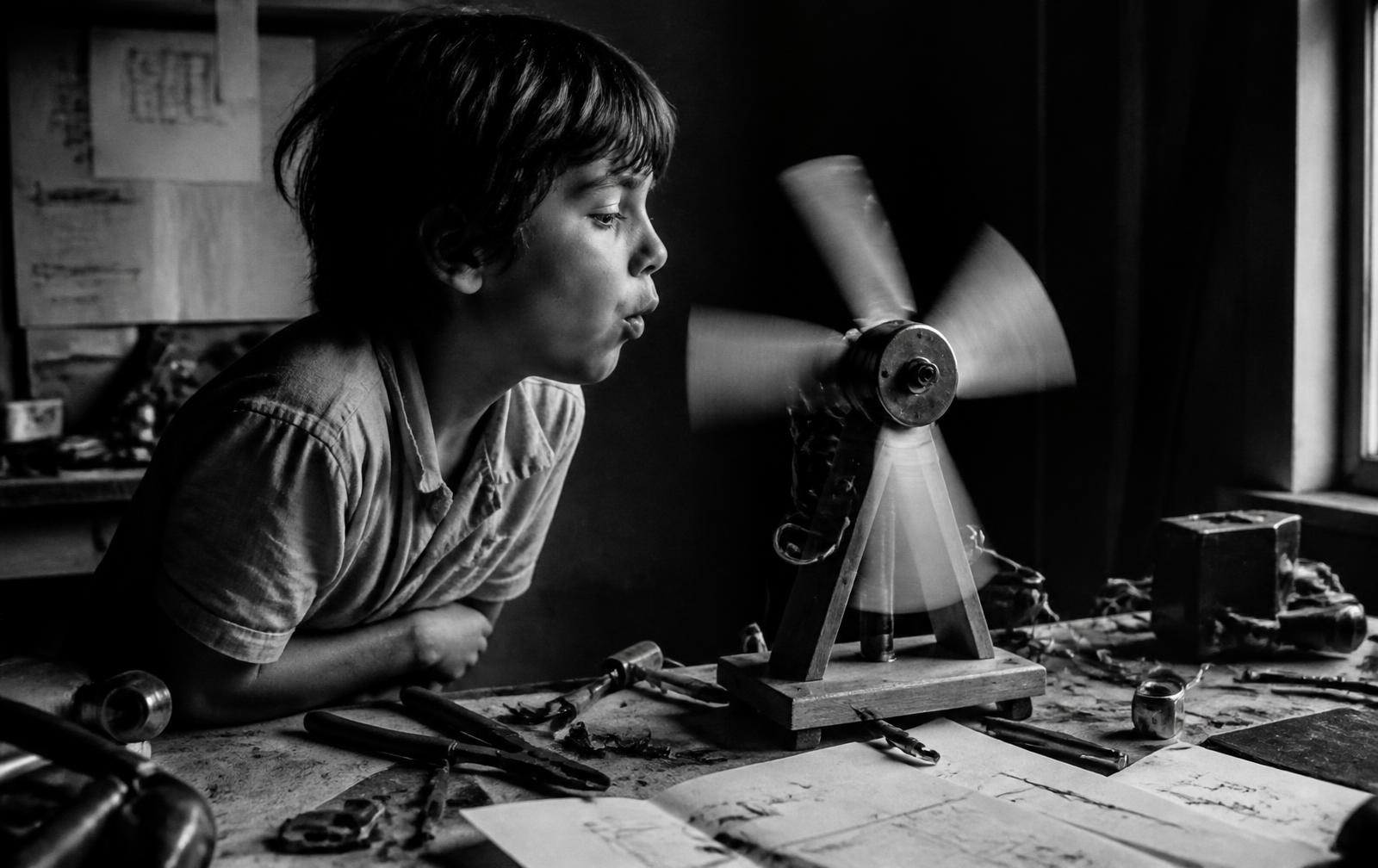
We turned the wind turbine 90 degrees.
Wind energy laid flat instead of raised on a tower
Why must a wind turbine be tall, heavy and constantly steered into the wind?
The classic three-blade machine needs height, mass and a yaw system that keeps the rotor facing the wind. The Flat Rotor turns that geometry by 90 degrees: the rotor area lies flat, the machine works independently of wind direction, and the loads that make tall machines expensive never arise in the first place.
The idea
- 01A horizontal rotor plane instead of an upright three-blade rotor.
- 02No yaw system: the machine does not need to be turned into the wind.
- 03The aim is a broad usable wind range rather than a narrow design point.
- 04Far lower tilting and bending loads, because there is no long lever arm above a tower.
- 05Modular construction: several rotors on a shared platform.
How it works
- The rotors sit flat on a load-bearing frame structure.
- The frame follows standard dimensions — in the concept, a 40-foot flat rack platform.
- Five rotors on that platform give roughly 35 m² of rotor area in the concept.
- Each rotor feeds its own generator string, so a failure stays local.
- Transport, installation and series production follow standard container dimensions.
What is different about it
- No yaw system, no nacelle, no tall tower.
- Lower structural loads allow installation on existing surfaces instead of new foundations.
- Dense modular use of unused elevated areas instead of single large machines.
- Standardised container-sized transport, and therefore series production instead of one-offs.
- Hybrid option: a patented wind-solar concept with PV integrated into the rotor surfaces.
What we already have
- First prototypes of around one metre in diameter are in trial operation.
- The wind-solar hybrid concept with PV on the rotor surfaces is patented.
What we still want to prove
- The container platform with five rotors, roughly 35 m² of rotor area and around 25 kW is a design and concept figure, not a measured output.
- Power curve and annual yield across a broad wind range, under controlled measurement.
- Structural behaviour under storm and sustained load.
- Agricultural uses are possible fields of application, not demonstrated agronomic effects.
Where it could matter
- Industrial and commercial roofs
- Ports and logistics areas
- Construction sites and temporary locations
- Farmland and agricultural buildings
- Off-grid supply and crisis situations
Request more
information
Factsheets, technical documents and presentations on Flat Rotor are not public downloads. Tell us who you are and what you need, and we will share what is appropriate.
Continue

secureAIR
secureAIR is a wearable respiratory protection system with a transparent mouth-and-nose shield. Integrated micro-fans guide the breathing air through a compact UV-C LED unit, with the aim of inactivating viruses and bacteria directly in the air stream. The face stays visible, and breathing and speech are meant to stay as unhindered as possible.
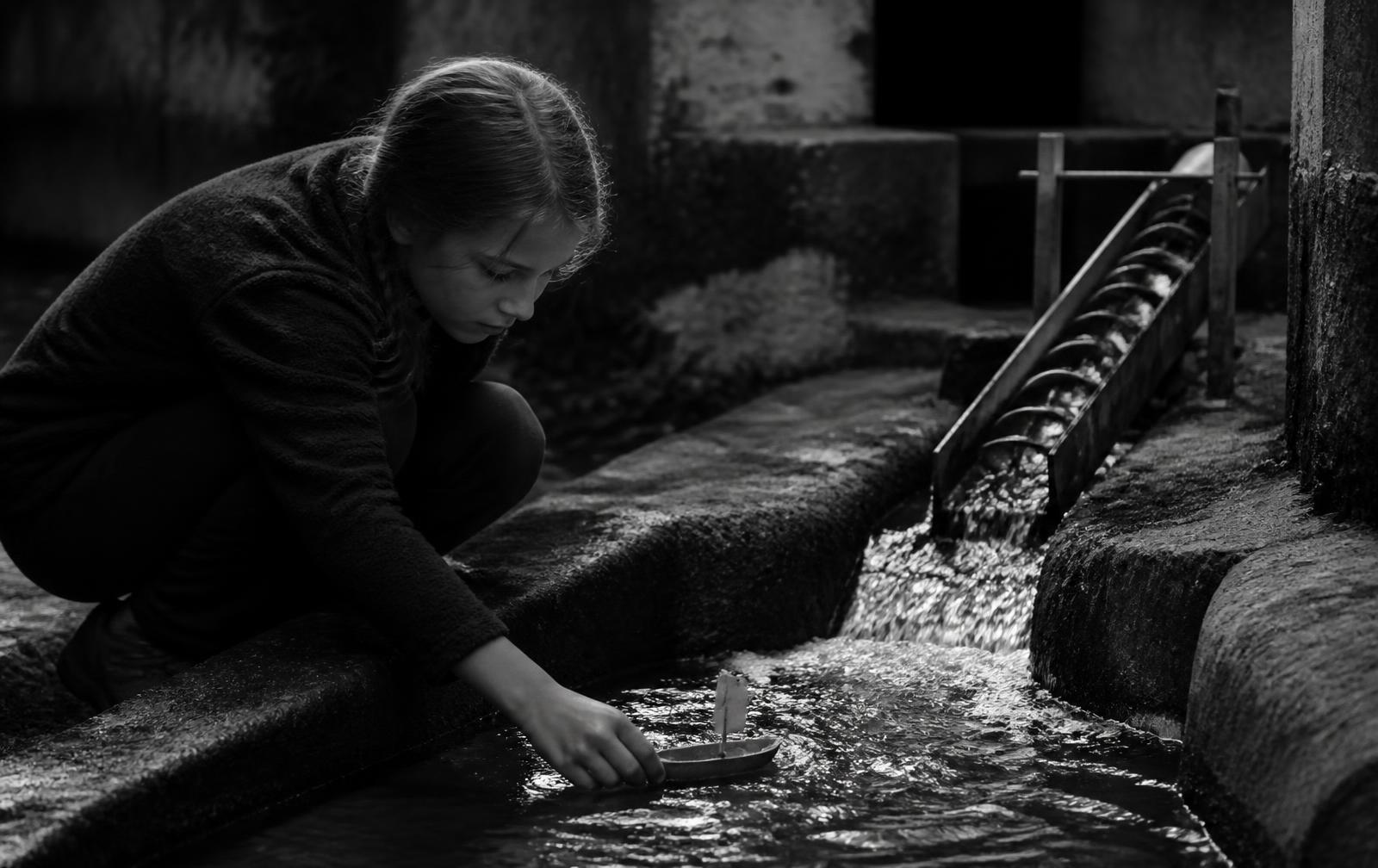
Tube-Body Turbine
The tube-body turbine guides flowing water through a spiral, rotating tube body. Instead of braking the flow head-on, it uses the forces created by continuously deflecting the water mass. A larger prototype has been tested and measured in the river Elbe.

Water Desalination
Established desalination relies on high pressure or a great deal of heat. TECLOW is pursuing a separation principle intended to work with far less of both. The principle is worked out theoretically; no prototype has been built.